Quick fixes for reducing Hearing Aid Feedback
You can try these simple but effective strategies to manage hearing aid feedback on your own:
1. Reinsert the device properly
Improper placement is a leading cause of feedback. Remove and reinsert your hearing aid to ensure a snug fit in the ear canal. A tight seal prevents sound leakage that causes whistling.
2. Clean your hearing aid regularly
Blocked microphones or receivers can increase the chance of feedback. Use a soft, dry cloth and a cleaning brush to gently remove debris. Schedule regular cleanings with your hearing care provider.
3. Check for earwax buildup
Even a small amount of earwax can cause sound to reflect back into the microphone. Ask your audiologist to check for buildup during appointments.
4. Turn the volume down slightly
While hearing aids are meant to amplify, too much gain can lead to sound leakage. Reduce the volume slightly in quiet settings if needed.
5. Inspect for physical damage
Cracked tubing, loose receivers, or worn domes can cause feedback. Check your hearing aid components regularly or ask your provider to do a thorough inspection.
6. Avoid reflective surfaces
Tile walls and mirrors can bounce sound back toward the microphone. You may notice more whistling in bathrooms or hallways—step away from these surfaces when adjusting your hearing aid.
7. Schedule a Feedback Test
Your hearing care professional can run a feedback calibration test to adjust internal settings. Many devices store feedback profiles that can be updated for better accuracy.
What is Feedback Cancellation Technology
In modern hearing aids like Widex, advanced technology is built to stop feedback — the high-pitched whistling sound — before you ever hear it. Instead of reacting after the fact, these systems work in the background to keep your hearing experience smooth and natural.
Here’s how it works:
1. It cancels feedback in real time
The hearing aid constantly monitors for signs of feedback, like when sound starts to loop back toward the microphone. If it detects this, the device instantly cancels out the signal that causes the whistling. It happens so quickly, you may never even notice it was about to occur.
2. It adapts to changes in your hearing setup
Things like replacing an ear tip, switching to a new dome, or even wax buildup can affect how sound moves through your ear. When this happens, the hearing aid automatically recalibrates its internal settings to keep feedback under control. There's no need for manual adjustments — the system does the work for you.
3. It coordinates across both ears
If you wear hearing aids in both ears, they communicate with each other wirelessly. This allows them to manage feedback more effectively as a team, especially in open-fit styles where sound is more likely to escape. The result is a more stable performance and a comfortable listening experience on both sides.
With this kind of intelligent feedback control, whistling becomes less of a worry, so you can focus on the sounds that matter.
Widex: A smarter, long-term fix for Feedback
If feedback keeps interrupting your day — even after trying common fixes — it may be time to consider hearing aids with built-in feedback control.
Smarter devices do more than just amplify sound. They’re designed to help you stay fully engaged, without the distractions of unexpected whistling or the need to constantly adjust settings.
By automatically managing feedback in the background, these advanced hearing aids let you focus on conversations, not corrections.
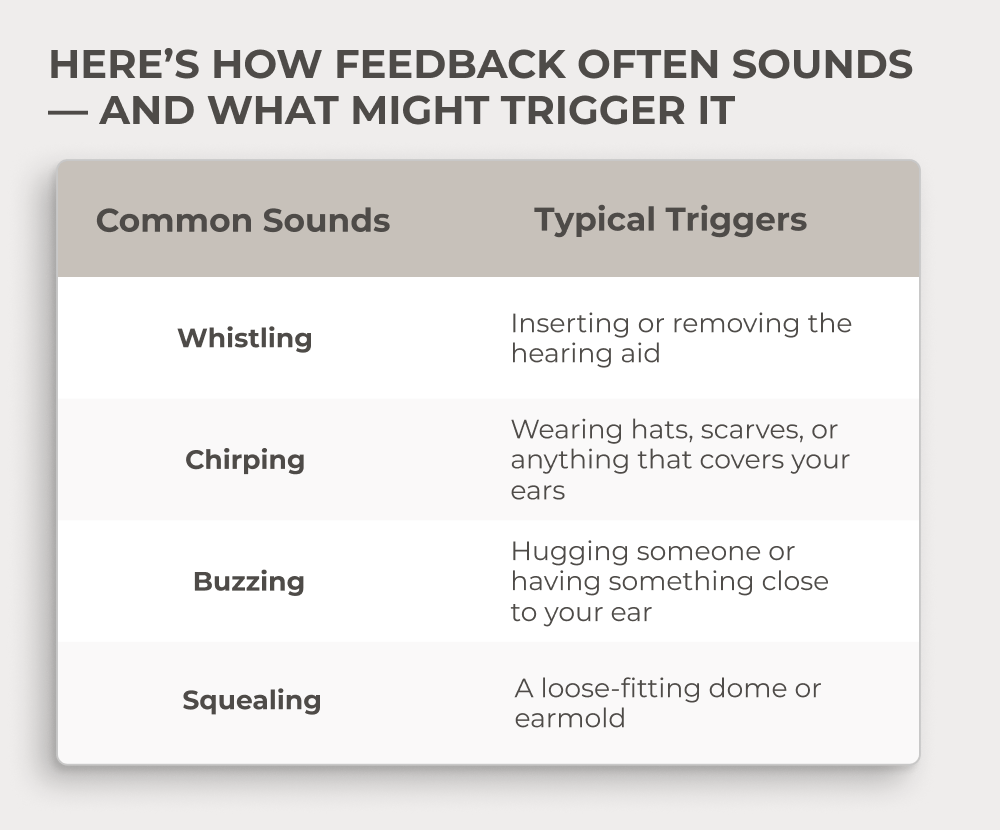
Modern brands like Widex prioritize natural sound and user comfort, even in challenging environments like busy cafés or tiled rooms. The result? Clearer hearing, fewer interruptions, and greater confidence — whether you're hugging a loved one or leading a meeting.
Hearing Aid Feedback doesn’t have to hold you back
If you’ve been wondering, “Why is my hearing aid whistling?” or struggling with feedback on a regular basis, know that you're not alone—and you’re not stuck.
Hearing aid feedback is a common, solvable challenge. With a combination of good care practices, regular audiologist support, and the right technology, hearing aid feedback cancellation can become an invisible part of your everyday hearing experience, doing its job in the background while you enjoy the sounds of life.
Don’t let feedback stand in the way of confident communication. Explore hearing aid options with advanced feedback management. Talk to your hearing care provider about models, like Widex, that actively cancel whistling before it starts, so you can focus on what truly matters.